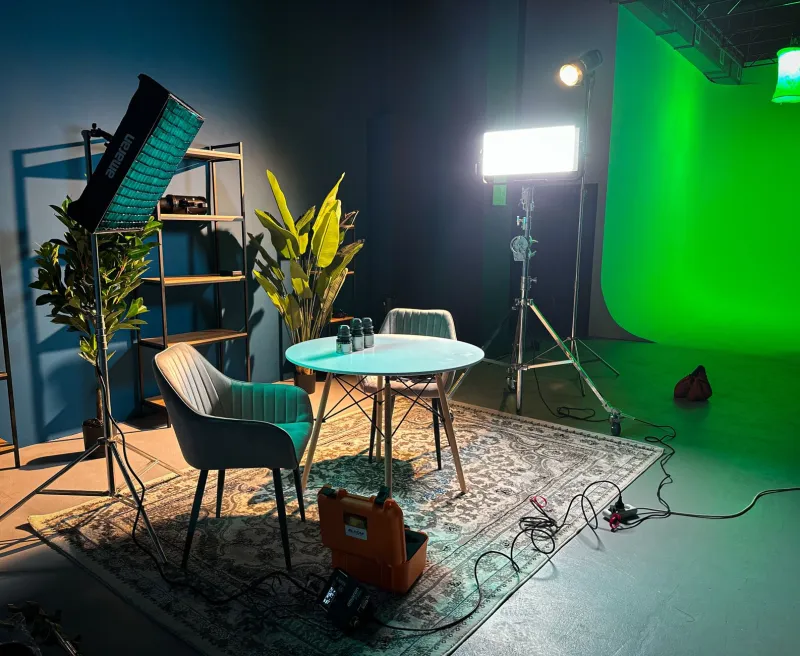
Everything in the Bag: A Chroma Kit That Survives Real UK Locations

Photo by Photo by Amanda Birkeland on Unsplash on Unsplash
There is a particular kind of optimism that makes you buy a 3m roll of chroma cloth before you own a light stand. I have been that person. The cloth lived rolled up behind a sofa for eight months, because transporting it anywhere required a car, a second pair of hands and a tolerance for public embarrassment.
The fix was not a bigger kit. It was a smaller one. A single daypack that holds a keyable screen, two lights, a frame and enough tape to bribe a caretaker — and no more than that. Here is what earned its place, and where it falls down.
The bag itself sets the rules
Work backwards from the bag. A 30-litre daypack is the realistic ceiling for a solo walk-and-shoot in a UK city: it fits under a train seat, it does not need a permit to be carried through a shopping centre, and it does not destroy your back on the walk from the bus stop.
Anything that does not fold into a 55cm stuff sack has to justify itself twice. That single constraint kills most of the tempting tat you see in camera shops.
Cloth or frame? Honestly, both — but buy one first
Pop-up fabric screens with a sprung steel rim (the 1.5m x 2m reversible green/blue ones) are the sweet spot for location work. They fold to the size of a large pizza, weigh under 2.5kg, and hang off a single light stand or a pair of clamps. Downside: a mild breeze turns them into a sail, and the fabric creases along the fold lines in a way that shows up as uneven key lighting.
Plain chroma cloth (a 1.5m x 2m piece of decent, matte, non-shiny polyester) costs a fraction of that, packs flat, and can be pinned to almost anything — a curtain rail, a fence, the back of a door. It needs more ingenuity to mount. For inserts — a hand, a face, a product on a table — cloth plus four bulldog clips usually beats a frame on a stand, because frames on stands wobble and wobbling screens produce wobbling edges in the key.
If you are buying one thing: cloth. If you are shooting anything full-body or with movement: the pop-up frame.
Mounting without leaving a mark
This is the part that separates a good afternoon from a lost deposit.
- Never assume you can tape a wall. Emulsion paint in rented flats will lift with almost any gaffer tape if it has been on more than an hour. Use a tension rod in a doorframe, or clamp to the top of a door instead.
- Super clamps are the whole game. Two clamps, a 1/4-inch spigot and a cheap ball head will attach a screen to a shelf, a bannister, a window frame or a market stall. Add a suction cup with a threaded stud for glass and tiled surfaces.
- Weight the bottom. A screen that moves 3mm mid-take is a nightmare in post. Sandbags are too heavy to carry — bring empty fabric water bags and fill them at the tap on site.
- Mind the heritage. Sash windows, iron railings and anything on a listed building are not for clamping. Ask first, and have a plan B that involves a doorway.
Outdoors, a fence post and two bungees beat a light stand every time. In public spaces, keep the footprint small enough that a warden walks past without stopping.
Light that fits in a side pocket
You are not lighting a set. You are lighting a rectangle of fabric about a metre and a half away from a subject, and that needs far less than the internet suggests.
One 60W bi-colour LED panel with a softbox, running on NP-F batteries, is enough for close and medium inserts. A second small panel for a hair or edge light helps separation, but you can fake it with a £15 pop-up reflector and whatever daylight is coming through the window.
Two rules worth taping to the inside of the bag:
- Light the screen as evenly as you can — two stops of falloff across the fabric is fine, four is not.
- Get the screen about a metre behind the subject, further if you have room. Every centimetre reduces spill on shoulders and hair.
Camera settings you should set before you leave home
Lock everything. Auto white balance is the enemy of a clean key, because it will drift between takes and your composite will flicker.
- Set white balance manually to 5600K and leave it.
- Lock exposure. No auto ISO, no auto shutter.
- Lock focus, and use a deep enough aperture that the subject does not drift out of it.
- Shoot the highest bitrate 4K your phone or camera allows. 4K gives you room to punch in during the edit and to reframe an insert that was framed badly on the day.
- Turn off HDR video modes on phones. They look lovely and they make keying miserable in most free editors.
- If you have a flat or log profile, use it, but do not overexpose the screen trying to protect the highlights. A slightly hot green is easier to key than a crushed one.
On a phone, use a third-party camera app that lets you lock focus and exposure, and clip a cheap ND filter on so you are not shooting everything at f/1.8 with a razor-thin depth of field.
When the weather has other ideas
British weather is not the enemy of green screen that people think. Flat overcast light is genuinely kind to a chroma cloth — no hard shadows across the fabric, no blown hotspots. Wind is the real problem.
A few contingencies worth planning for:
- Gusts: bungee the top corners to something structural, not to the stand alone.
- Rain: chroma cloth is not waterproof and it stains. A cheap shower curtain taped behind the screen as a sacrificial layer has saved more than one shoot.
- Sudden sun: a hard shadow across a green screen is almost impossible to key cleanly. Move, or wait, or shoot tighter.
- Cold: batteries drop capacity fast below about 5°C. Keep spares inside your coat, not in the bag.
The condensed kit list
Chroma cloth and a pop-up frame, two super clamps, four bulldog clips, a suction cup mount, two bungees, a roll of white gaffer and a roll of black, a tension rod, two LED panels with stands that pack to 50cm, a reflector, a grey card, a lint roller, spare batteries and a microfibre cloth.
That little lot weighs about 6kg and fits in a bag you can carry onto a train. It will not shoot a dance number. It will shoot a convincing insert in a rented flat, a park shelter or a quiet corner of a station forecourt — and it will get you home without a complaint from the landlord.