Fake Snow, Warm Windows: A Keyable Festive Set for Under £100

Photo: cosy Christmas cottage interior window fairy lights stone wall, via images-wixmp-ed30a86b8c4ca887773594c2.wixmp.com
Christmas adverts do not look expensive because someone has rendered a blizzard. They look expensive because the window is glowing, the lamp is warm and the stone wall has texture. The snow is the last five per cent. If you have a spare corner, a green screen and a free weekend in November 2026, you can build a very convincing Cotswold-cottage Christmas set for around £100 of dressing — assuming you already own a camera and a couple of lights.
Start with the window, not the snow
The hero shot in most festive ads is someone looking out at a snowy village. Recreate that with a practical window frame and a green screen panel behind it. Buy a cheap frame from a charity shop, remove the glass, and tape green fabric or green card across the opening. Keep the frame square to the camera and lock the tripod off. In post, track the window opening and drop in a plate of a snowy high street, a cottage exterior or even a phone-shot clip of your own street at dusk. The frame gives you the edges; the green gives you the replacement.
Do not try to key the whole room. Key only the window. That keeps the spill down and means your actor can stand close to the frame without turning into a green-tinged ghost.
Build a faux-stone wall that behaves
A Cotswold cottage needs stone, but real stone is heavy and rental cottages are not cheap. Use a roll of stone-effect wallpaper in warm grey or honey-coloured tones. Hang it on a foam board or a cheap clothes rail, then add depth with a charity-shop picture frame, a sprig of fake ivy and a practical lamp. Keep the wall at least a metre from the green screen so green bounce does not crawl up the texture.
Matte finishes are your friend. Avoid glossy wallpaper and shiny paint. If the wall is too clean, brush a little diluted brown acrylic into the corners and wipe it back. The camera will not know it is wallpaper; it will just read texture.
Snow overlays: two layers, not one
Snow works best when it has depth. Use a far layer of small, soft flakes outside the window and a near layer of larger, blurred flakes drifting across the frame. You can buy overlays or generate them, but check the licence if you are publishing. A cheap alternative is to shoot your own: black card, a handful of fake snow, a torch and a slow shutter. Drop the snow in front of the black card, light it from the side and film at 50fps. In post, set the blend mode to Screen and grade it cool.
Keep the near snow subtle. If it covers the actor's face, it looks like a filter. A few flakes at the edges is enough.
Warm light, clean green
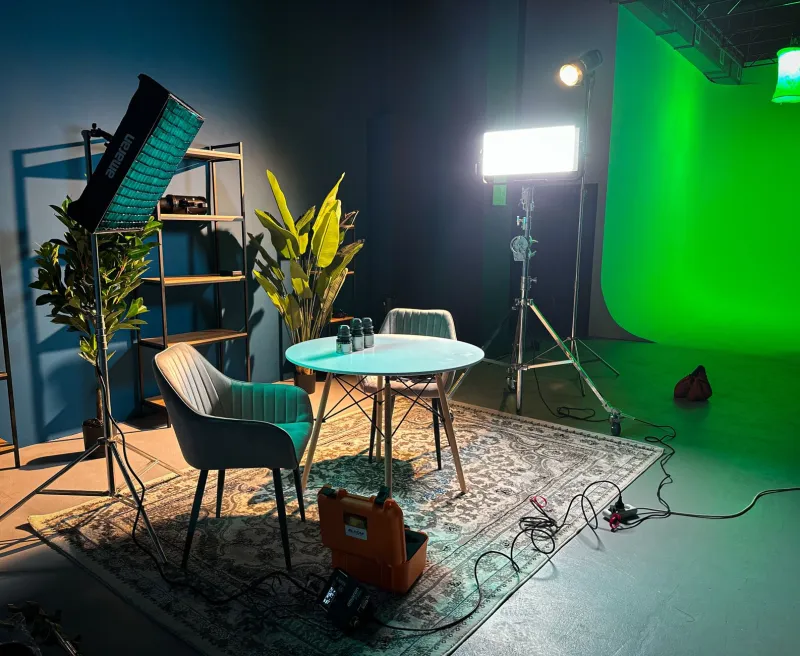
The trick is separating the warm interior from the cool exterior. Use tungsten or 2700K practicals for the room — a table lamp, fairy lights, a fake candle — and light the actor with a soft key that matches. Then light the green screen separately with a clean, even source. Flag the warm light off the green so it stays neutral. If your green screen goes yellow, the key will struggle.
A backlight on the actor's hair sells the window glow. A cheap LED panel with a warm gel, placed behind and to one side, is enough. Keep exposure under control: warm lamps clip quickly, and clipped highlights are harder to grade than slightly dark ones.
The £100 dressing list
- Green screen fabric or card, 2m x 3m: £25–£35
- Charity-shop window frame: £5
- Stone-effect wallpaper roll: £12
- Warm LED bulbs and fairy lights: £15
- Fake snow blanket and loose flock: £8
- Black card and flags: £10
- Clamps, tape and drawing pins: £10
That is about £95 if you shop around. It assumes you already have a camera, a tripod and at least one light. If you do not, a second-hand LED panel and a diffuser will push the budget over £100, but you can borrow or hire for a day.
A November 2026 shooting plan
Shoot in the first half of November if you can. Christmas adverts are already on television by 8 November 2026, so you are not early — you are on time.
Week one: test the window key. Put the frame against the green screen, shoot a ten-second locked-off shot and key it. Check the edges, the spill and the tracking. Shoot your exterior plate on a grey afternoon or use a stock clip.
Week two: dress the set and shoot the interior. Keep the camera on a tripod and shoot wide, medium and close-up. Grab cutaways: hands around a mug, a spoon in a tin, a lamp being switched on. Cutaways hide keying problems and give you edit options.
Week three: pickups. Shoot the near-snow overlay against black, plus any window reflections. Week four: edit and grade. Warm the interior, cool the exterior, add grain to the plate and a soft glow around the window.
You do not need a cottage. You need a corner, a frame and a bit of restraint.